


Veeam Recovery Orchestrator Knowledge Base
Performing replication with Veeam Recovery Orchestrator
Veeam Recovery Orchestrator enables an additional way to perform for VM replication, thanks to the embedded Veeam Backup & Replication instance installed inside the VRO server.
Use production VBR to perform Replication (PUSH replica from Production)
The standard vSphere VM Replication procedure for an orchestrated DR is to create a replication job in the production VBR, then create a Replica Plan in Veeam Recovery Orchestrator to fail over to the DR site.
In case of disaster, the production VBR is not required as the embedded VBR in VRO is able to detect the replicas and start them in the DR location.
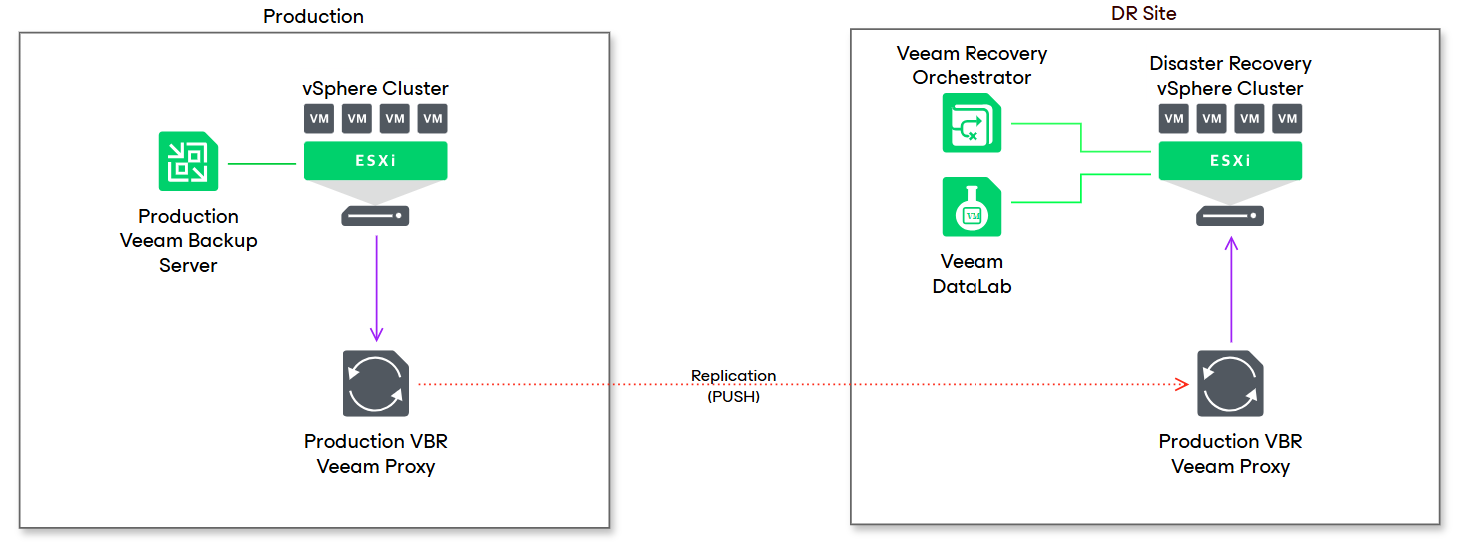
This approach lets the production VBR manage all aspects of the replication, while VRO is used exclusively to perform the failover through the orchestration plan.
Use Embedded VBR to perform Replication (PULL replica from DR)
Another way to perform replication is to make full use the embedded VBR installed, extending its use not just for failover.
In this scenario, the embedded VBR manages the configuration, schedule and performs the replication job, pulling data from production to DR, while the Orchestration Plan is created in VRO as usual.
While on paper this approach doesn’t look very different, it provides the following benefits:
- there is no need to set up the connection from VRO to the production VBR (only connection to vCenter is required)
- there is no visibility of the replication jobs from the production VBR (may be considered slightly more secure)
- makes use of the unused VRO resources, easing the requirements of the production VBR environment
- replication will still be performed even if anything happens to the production VBR server
- the VRO server is a single management point for the replica schedule and DR orchestration (useful when different teams manage production and DR)
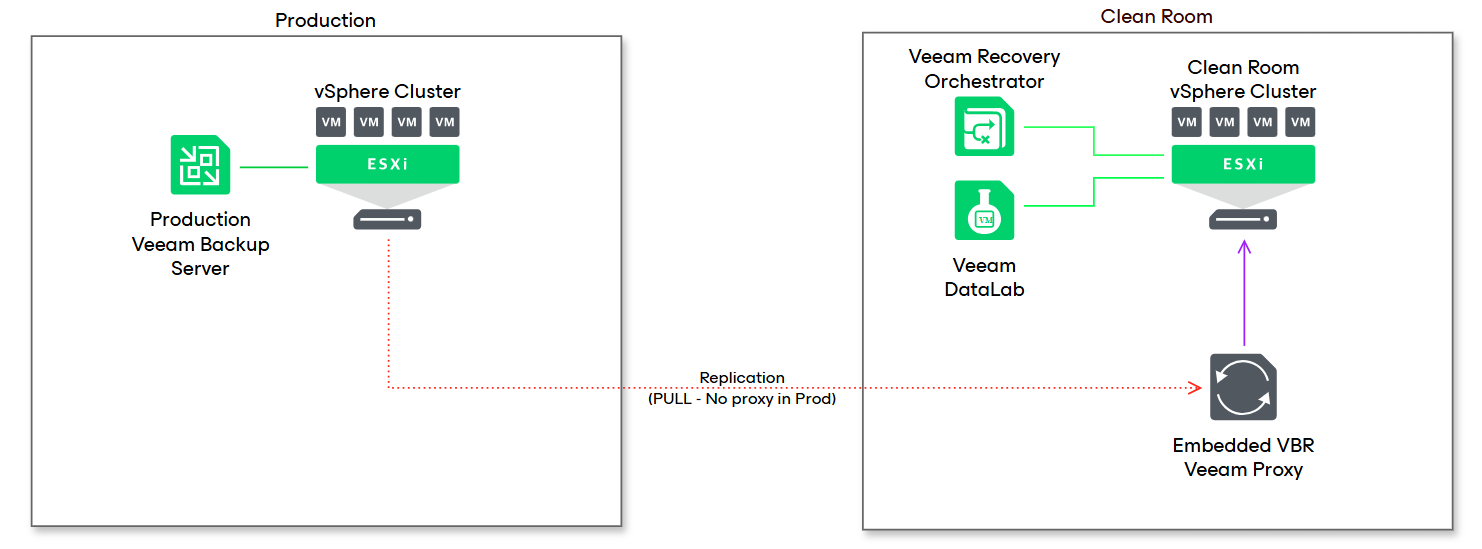
The only caveat here is that if the site is remote and bandwidth is limited, a proxy for the embedded VBR on the production site is recommended to optimize data transfer, otherwise additional WAN traffic is expected as the target proxy will also act as source and there will be no data compression and deduplication.
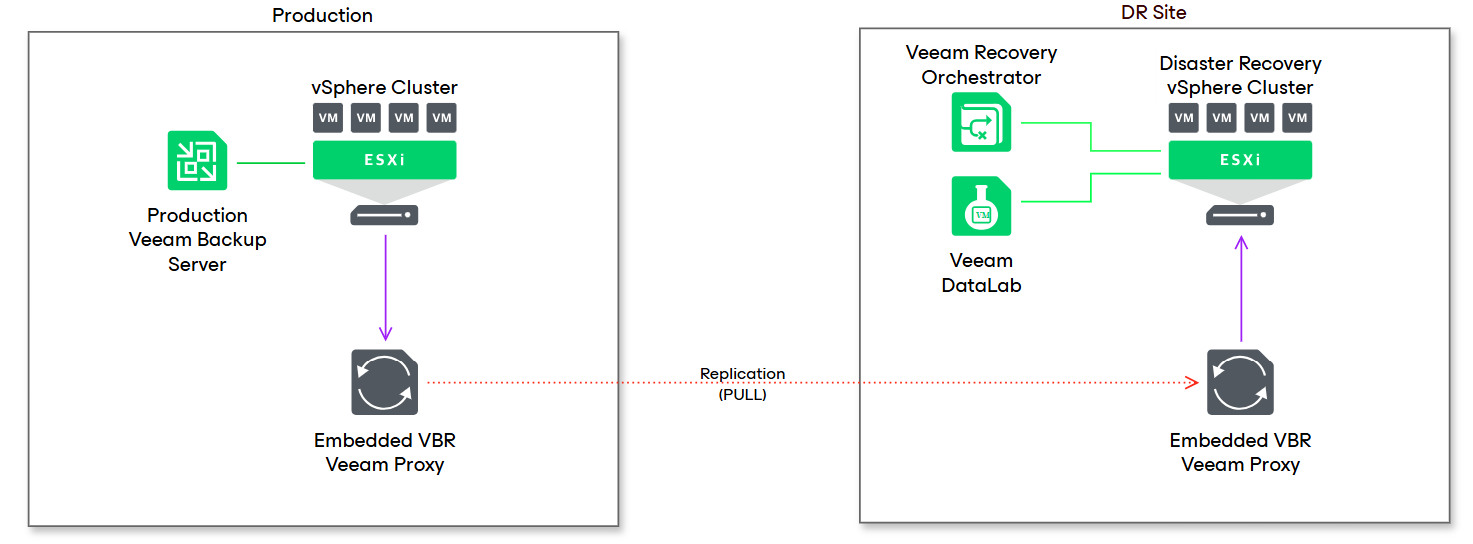
In case of local connection to a near safe/clean room, this recommendation may be less necessary if there is enough available bandwidth.
Regardless of the replication mode, the failover/failback is performed the usual way and doesn’t require additional considerations.